Save And Earn

Making Your Money Go Further

Renovate, Extend or Move? What’s Your Next Housing Market Move?

April 25, 2022 By Erica Hughes This post may contain affiliate links

It’s been a strange few years for the housing market, although prices have been moving upwards throughout.  It was a bit difficult to view houses or consider moving in the early days of Covid as viewing prospective properties and actually moving was very difficult.  After that things started moving on the property market front and there was a lot of pent up demand.  People also started doing work on their homes – being stuck at home all day had made any potential issues a lot more obvious.  The dust is starting to settle now and if you haven’t already made a move to renovate, extend or move then it’s a good time to be assessing your options.

renovate or extending your property
Photo by Annie Gray on Unsplash

Renovate

Maybe your home is big enough and it’s in the right place already, but you are a bit dissatisfied with it.  A new kitchen or bathroom will make it feel so much better and you’ll enjoy being there a lot more.  Renovating a home, particularly where that work involves a kitchen or bathroom, can get very expensive so you might want to look at refinancing first.  You can look at calculating your mortgage payments if you did remortgage and seeing what is affordable for you.  Renovating your home will mean that you are able to choose what suits you and your budget and it’s easier to scale up or down your plans depending on your finances.  Maybe by not extending or moving, you could pay off your mortgage more quickly.  You’ll get to live in the home that you have designed, chosen and made your own.  Plus you’ll be adding value and desirability to your home, if you should chose to sell in the future.

Extend

Is it better to move house or extend your home?  It’s not a straightforward question to answer because there are so many variables.  Generally you should be careful not to overextend your home.  Look at other homes on the street.  Have many done a similar extension already?  Has it paid off when they came to sell? Generally it’s cheaper to extend than move as long, as you don’t create an giant, eyesore of a house on a road with lots of smaller, very stylistically similar houses.  Are you able to create the features someone would expect from the type of house you are creating?  For instance, certain types of property generally need to have parking (large detached family houses for example), although in central London this might be less of an issue.

Move

Sometimes a move is the only way to get the space and location of house that you want.  Make sure you factor fees into whatever financial calculations you make and consider additional costs like stamp duty, removal costs and solicitors fees.  Make sure your reasons for moving justify the financial costs and that you aren’t just moving because you are a bit bored.  Be clear on what you want the move to achieve and your budget for making it all happen.

What’s your next housing move?

Make sure you consider all your options before you decide.  You don’t want to renovate or extend and then realise you should have moved.  If you are a spreadsheet or list kind of person, it makes sense to work out the pros and cons, maybe even weight them.  Getting a rough idea of costings for all options is another great way of focusing your mind.  Good luck with whatever you decide your next house move should be!

Filed Under: Money, Property

5 Tips to Make the Best Decision on Which Bank Account is Right for You

February 15, 2022 By Erica Hughes This post may contain affiliate links

withdrawing money from a bank account
Photo by Nick Pampoukidis on Unsplash

Introduction: What is a Bank and Why do I Need One?

A bank is a financial institution that provides financial services to customers. It’s where you can deposit your money, save it, take out loans, and more. It’s a institution that helps you manage your money and plan your finances. Choosing a bank is not an easy task. There are so many banks available that it is hard to know which one to choose.  In fact, there are ever more choices out there in our digital age.

What type of bank do you need?

The first thing you should look at is the type of banking service you are looking for. Are you looking for a traditional bank or are you looking for something more unusual?  Do you want a bank to handle your current account and maybe some simple savings accounts or are you looking for something more specialised like a mortgage lender.  Once you know what services and products you are wanting your bank to provide, you are a step closer to choosing which one to trust with your money.

Are you looking for good savings rates or a favourable loan rate?

Another thing you need to think about is how much money you have and how much money you plan on depositing into the account each month. The more money that goes into your account, the more services and benefits the bank will provide for you.  If savings are important then focus in on your prospective bank’s savings options.  If you are likely to be in the red, then loans and overdrafts will be more important.

How do you want to access your money and your bank’s services?

Next, consider what is important to you when it comes to your banking services. Do you want a branch nearby? What about investments? Or maybe your priority is getting access to your money digitally when you want it.  If so, maybe you should consider app based bank account.

Are you wanting to keep personal and business banking under one roof?

It’s certainly very convenient to have all your banking needs met in one place.  It saves you having to get to know how another institution works and where to find things on their website or app.  The thing is that the bank which is best for business may not be the one for your personal account.  You may need to compromise slightly to get the convenience of a one stop shop.

Will my money be safe?

It’s worth checking that your money will be safe.  Is the bank you are considering part of your country’s bank deposit protection scheme.  Not all institutions that you might consider to be banks will be covered, for instance Paypal isn’t a bank, so isn’t part of the UK’s Financial Services Compensation Scheme (FSCS) can pay compensation if a bank, building society or credit union is unable to pay claims against it.

The deposit protection limit for this scheme is:

  • up to £85,000 per eligible person, per bank, building society or credit union
  • up to £170,000 for joint accounts

Obviously, this is valuable protection so if a financial institution isn’t covered by the scheme, you should consider how much of your money you want to leave with them.

Conclusion

Make sure you are very clear about your banking needs before you start trying to find a bank that will work for you.  It’s a great idea to do plenty of research so that you pick the right bank first time, but don’t be afraid to switch banks in the future.

Filed Under: Money

Tips For Trading: How To Succeed In Financial Markets

January 18, 2022 By Erica Hughes This post may contain affiliate links

trading
Photo by Marga Santoso on Unsplash

Thanks to apps such as Robinhood and Binance, more people are getting into financial trading. However, most new investors don’t necessarily know the ins and outs of the process, which can land them in hot water.

In this piece, we’ll provide a few tips for how to succeed in these financial markets while protecting your hard-earned money.

Learn To Save

There are plenty of apps that claim they can help you save –– and we’re not saying that they’re wrong! However, it’s a good idea to learn how to do all of this the good old-fashioned way as well: with paper, a pen, and your favourite calculator. Our post titled ‘How To Improve Your Savings Habits And Save More Money’ covered some tips already for things like drawing up budgets, tracking spending, and learning how to cut costs on daily or regular expenses. These strategies make or a good start, and once you’re confident in your saving, you can dig deeper into trading with an extra financial cushion.

Set Investment Goals

You are the investor, so you call the shots. You can decide how you want to set up your goals, but remember to follow the SMART standard explained by MindTools. It stands for “Specific, Measurable, Achievable, Relevant, and Time-Bound,” and each characteristic helps you make sure that you can really reach those goals in the allotted amount of time. Setting goals also helps investors look at the bigger picture rather than panicking during every dip and selling out before the prices rise again.

Practice

While it’s true that practice makes perfect, you don’t want to practice with real money (yet!). The best and most common way to practice and get the hang of trading is by way of demo accounts. These accounts are characterized by FXCM as being full simulations of actual trading markets (concerning stocks, forex, and even commodities). You can choose what market you’d like to practice with, and spend time getting to understand how it works, how volatile it can be, and what it’s actually like to execute trades in real time.

Check Your Risk Tolerance

Deep down, you’ll probably be aware quite early of how much you’re able to invest, and how much is too much. But it’s still important to give this careful, honest thought. Be sure to look at how much you can afford to invest without cutting into the money you need in order to pay your bills. Some argue that monthly expenses should not exceed 30% of total income; The Balance recommends setting 30% aside just for rent. Whatever the case, consider your specific budget, and how much you can risk setting aside for investment alongside normal expenses. Naturally the money has a chance to grow, but the amount you put in initially is still essentially a product of risk assessment.

Do your Research

The financial market can change from one day to the next (or even in a matter of minutes). It’s recommended that you stay on top of things by following relevant news, watching financial news channels if you have access to them, and these days –– perhaps most of all –– even listening to up-to-date podcasts. Not only do these pods keep you, well, up to date, but the good ones also teach you tips and tricks that will help you make the most sound decisions regarding your investment portfolio. U.S. News & World Report highlights “Fifteen Minute Financial Advisor,” “Invest Like The Best,” and “The Meb Faber Show” as some of the best, though a simple search through your preferred podcasting app will give you plenty more options to sift through as well. Try a few and stick to your favourites – but make sure to have more than one. Branch out and make sure you’re listening to a broad range of experts.

Financial markets can offer excellent opportunities to make some money and help build your nest egg, but success does require research and prudence. Keep your ear to the ground and you’ll do just fine.

Filed Under: Money

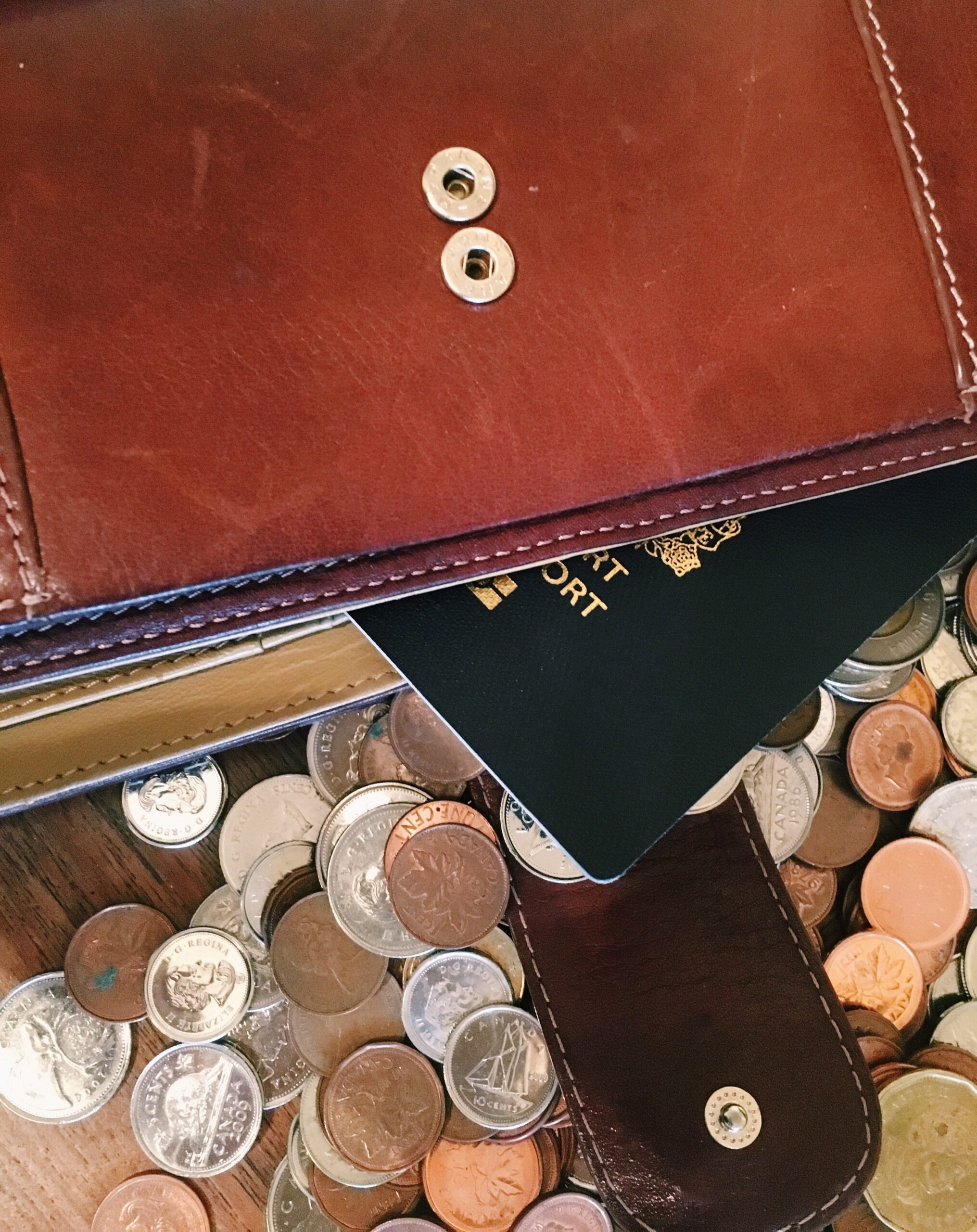
Carrying a Purse or a Wallet Could Soon be a Thing of the Past

December 6, 2021 By Erica Hughes This post may contain affiliate links

Are you still buying things with cash?  I still did quite a few transactions by cash before the covid pandemic, but that led to a more abrupt change in my behaviour.  My gradual move away from cash to card became overnight an almost wholesale renunciation of cash as a means of paying.  Even small purchases that I’d previously considered too small for card payment, I started making by card.  Retailers were encouraging the behaviour too and there no longer seemed any reason to use cash.  It got to the point where I was using the same pound coin for my supermarket trolley for months upon end.

death of the purse

A new nationwide study has found that 52 percent of Britons claim they never take notes or coins with them on routine trips, instead using their mobile phone to make payments. And more than a third (36 percent) of those surveyed said they only ever use a purse or wallet if travelling further than usual, while almost a fifth (18 percent) never use theirs.  16 percent of Brits can’t even remember the last time they brought their wallet or purse out with them – while a further 14 percent admit it’s been at least six months since they used one. In fact, only 14 percent of the nation always carry cash – and just 8 percent of 18- to 29-year-olds.

 Overall, 83 percent of Brits are making fewer cash purchases than they were doing so five years ago. While 72 percent believe it’s really only older folk who are using cash routinely these days. Little wonder then, perhaps, that almost two thirds of the nation (65 percent) think the days of carrying cash are coming to an end.

The study, by Samsung Pay, found that the main reasons Britons are preferring to pay for products and services with a card or phone are worries about losing cash while out (24 percent), concerns about how hygienic it is to use cash anymore (23 percent), and feeling vulnerable about getting cash out in public (22 percent). While more than a quarter (26 percent) of us think it’s a big faff having to count out change to pay for things, and an efficient 19 percent say that it simply takes too long.

The study found that 73 percent of restaurant meals are paid for by a cashless transaction, and 64 percent of Brits always pay for a drink in a pub by card or phone. 83 percent will pay for their big food shop by cashless means, and 85 percent pay for clothes and shoes by card or  phone, and 71 percent don’t use cash for train or bus tickets. 52 percent of haircuts are now paid for without cash, and the same number (52 percent) of car parking fees are now paid for in a cashless transaction.

 The research also found that 89 percent of the nation believe they’ll come a point soon when neither cards or cash is used, and people will pay for everything with their mobile phone. And almost a quarter of Brits (24 percent) believe phone payments are much more secure and feel safer than using a card or cash for transactions.

 Teg Dosanjh, Director of Connected Services and Technology, Samsung UK and Ireland, said: “It’s no surprise that we’re seeing so few cash transactions being made by customers now, and when you factor in the number of shops and restaurants that have stopped accepting cash altogether, it’s easy to see why. In addition, we’ve become more tech savvy, with a rise in the number of Brits choosing to use their phones to make contactless payments, with many of us just wanting the flexibility and convenience of being able to pay however, and whenever we choose.”

 “Samsung Pay gives customers a safer and more secure way to pay over traditional plastic cards because they offer multiple layers of security and protection built in, so customers can tap and go, knowing their money is protected when out spending. We’re also more conscious of hygiene now, with customers preferring to avoid touching the traditional chip and pin machines and instead using their phone to tap and pay, which has likely added to this shift towards mobile payments.”

 And although picking up a penny is said to bring good luck, 39 percent of Brits just wouldn’t bother doing so – with a further 16 percent admitting it would be grotty and unhygienic.

 Meanwhile almost a quarter of Britons (24 percent) have a penny jar or piggy bank sitting at home, filled with coins they never use.

Filed Under: Money

About Me

Hi

I have a background in financial services and enjoy writing about all things money.  I like coming up with ideas to save you money and to earn you some extra cash.  More about me here. Get in touch via email. erica

Categories

  • Blogging
  • Borrowing
  • Budgeting
  • Car
  • Earn
  • Financial Education
  • Gifts
  • Giveaway
  • Inheritance
  • Money
  • Property
  • Reward Sites
  • Save Money
  • Saving and Investment
  • Training and education
  • Uncategorized

Copyright Erica Hughes 2021 Affiliate links means that sometimes if you click through to a website and register or purchase something, I get a commission from that sale at no extra cost to you. All opinions and reviews are my own.

We use cookies on our website to give you the most relevant experience by remembering your preferences and repeat visits. By clicking “Accept All”, you consent to the use of ALL the cookies. However, you may visit "Cookie Settings" to provide a controlled consent.
Cookie SettingsAccept All
Manage consent

Privacy Overview

This website uses cookies to improve your experience while you navigate through the website. Out of these, the cookies that are categorized as necessary are stored on your browser as they are essential for the working of basic functionalities of the website. We also use third-party cookies that help us analyze and understand how you use this website. These cookies will be stored in your browser only with your consent. You also have the option to opt-out of these cookies. But opting out of some of these cookies may affect your browsing experience.
Necessary
Always Enabled
Necessary cookies are absolutely essential for the website to function properly. These cookies ensure basic functionalities and security features of the website, anonymously.
CookieDurationDescription
cookielawinfo-checkbox-analytics11 monthsThis cookie is set by GDPR Cookie Consent plugin. The cookie is used to store the user consent for the cookies in the category "Analytics".
cookielawinfo-checkbox-functional11 monthsThe cookie is set by GDPR cookie consent to record the user consent for the cookies in the category "Functional".
cookielawinfo-checkbox-necessary11 monthsThis cookie is set by GDPR Cookie Consent plugin. The cookies is used to store the user consent for the cookies in the category "Necessary".
cookielawinfo-checkbox-others11 monthsThis cookie is set by GDPR Cookie Consent plugin. The cookie is used to store the user consent for the cookies in the category "Other.
cookielawinfo-checkbox-performance11 monthsThis cookie is set by GDPR Cookie Consent plugin. The cookie is used to store the user consent for the cookies in the category "Performance".
viewed_cookie_policy11 monthsThe cookie is set by the GDPR Cookie Consent plugin and is used to store whether or not user has consented to the use of cookies. It does not store any personal data.
Functional
Functional cookies help to perform certain functionalities like sharing the content of the website on social media platforms, collect feedbacks, and other third-party features.
Performance
Performance cookies are used to understand and analyze the key performance indexes of the website which helps in delivering a better user experience for the visitors.
Analytics
Analytical cookies are used to understand how visitors interact with the website. These cookies help provide information on metrics the number of visitors, bounce rate, traffic source, etc.
Advertisement
Advertisement cookies are used to provide visitors with relevant ads and marketing campaigns. These cookies track visitors across websites and collect information to provide customized ads.
Others
Other uncategorized cookies are those that are being analyzed and have not been classified into a category as yet.
SAVE & ACCEPT