Save And Earn

Making Your Money Go Further

Top Tips To Teach Your Kids About Money Amid Increasing Cost of Living

March 18, 2022 By Erica Hughes This post may contain affiliate links

teaching children about finances
Photo by Annie Spratt on Unsplash

It is important for children to learn about finance at an early age. They need to be taught the importance of money and how to manage it. Financial literacy can help them in their future careers, as they will be able to make better decisions.  Children should be taught how to manage their finances and how money works, since it is important for their education and future career. With the cost of living rising there’s never been a more important time to teach them how to manage money.  Involving them now and seeing good money management first hand is a great way to equip them for the future.

Start with the basics of money and finance

How you introduce money to your children will partly depend on their age. A good place to start is getting children comfortable handling cash and coins. Explain to them how money is used to buy things and that it must be earned before it can be spent.

Speak openly about small financial decisions

Start getting your child involved with minor financial decisions, such as which brands and items to buy when shopping. This way your child is able to understand the decisions you make while also feeling in control of certain financial choices.

Older children could also help with budgeting while shopping if you ask them to keep a running total of the items you buy. Not only will this help their maths skills, but it can also help them to understand how small items can still add up in price and not everything is affordable on a budget.

Try simple games with younger children

Creating easy monetary games such as counting pennies can help your child understand the value of different denominations of money. Try using a pile of 1p coins and asking your child to match the number of coins to the price of a higher value coin, such as 10p or 50p.

Set a good example with your own finances

There are no two ways about it, children learn money habits from their parents. Showing them small activities, such as checking the receipt after your shop or putting money into savings can start developing positive habits from a young age.

Encourage your child to ask questions without repercussion in this setting. While you might not necessarily have all the answers, opening up a dialogue is a healthy way for your child to learn more about finance.

Use pocket money as an incentive for small tasks

Using pocket money as an incentive to do chores around the house not only helps you, but it also helps your child learn more about the value of money and what it takes to earn it. Creating a simple plan with a set amount of money for different tasks, along with caps per week or month, is a great way to help your child start understanding where money comes from.

Teach them that actions have consequences

With utility bills increasing, there’s no better time to teach children how a household works. Reminding them to turn off their TV or games console after use will not only save you money in the long run, but also teach them about bills and the impact on the environment. They will also learn about the importance of sustainability and saving the environment, too. You could even go further and show them what the numbers on your gas/electricity meters mean, to show them how energy bills are calculated.

Use pocket money to teach children how to save

Alongside teaching children, the relationship between work and money, household chores and pocket money is also a great opportunity to show children how to save. If your child has shown interest in a more expensive purchase, you could set them up with an old-fashioned piggy bank where they can ‘deposit’ their earnings or create a chart for them to fill out so they can track how much money they have.

Use trips to the shop to learn about saving vs. spending

Another practical way to teach a child about the benefits of saving is by visiting shops. Allow them full control of their own money on the understanding that if they don’t have enough, they won’t be able to borrow any more. The more they feel in control of their own finances, the more they will be able to make sensible decisions when it comes to spending or saving.

Use digital tools with older children

There are a whole range of online tools for teaching older children about online banking and using cards for payments. One of the leading products on the market is GoHenry, which is suitable for those aged six and up, costs £2.99 a month and allows parents to set strict spending limits, monitor what their kids are buying and where they are spending their money.

Teach older children about selling old toys for extra money

If you don’t want to give your child pocket money, teaching them about ways to earn money for themselves is a helpful alternative. When they’re old enough, you could ask your child to go through their old toys, books and clothes and set aside which ones they’d like to sell. You can then sell these on their behalf through online auction sites such as eBay or Facebook Marketplace. Not only is this a great way for your child to feel independent in earning their own money, it presents an opportunity to also discuss how to use the internet safely.

James Andrews, a spokesperson from money.co.uk, speaks about why teaching children how to handle money from a young age is so beneficial.

“Creating an environment where you can speak more openly with your children about financial decisions is key to them gaining an understanding of the value of money. Showing them how to make choices when shopping is a great way to help set up good habits and understanding of managing money.

“It’s important to make sure your lessons are age-appropriate and that you continue to involve and teach your children about money as they grow. A healthy relationship with finances starts at a young age, and children learn most of their habits from their parents.”
Filed Under: Budgeting

Using A Slow Cooker To Save Energy

February 21, 2022 By Erica Hughes This post may contain affiliate links

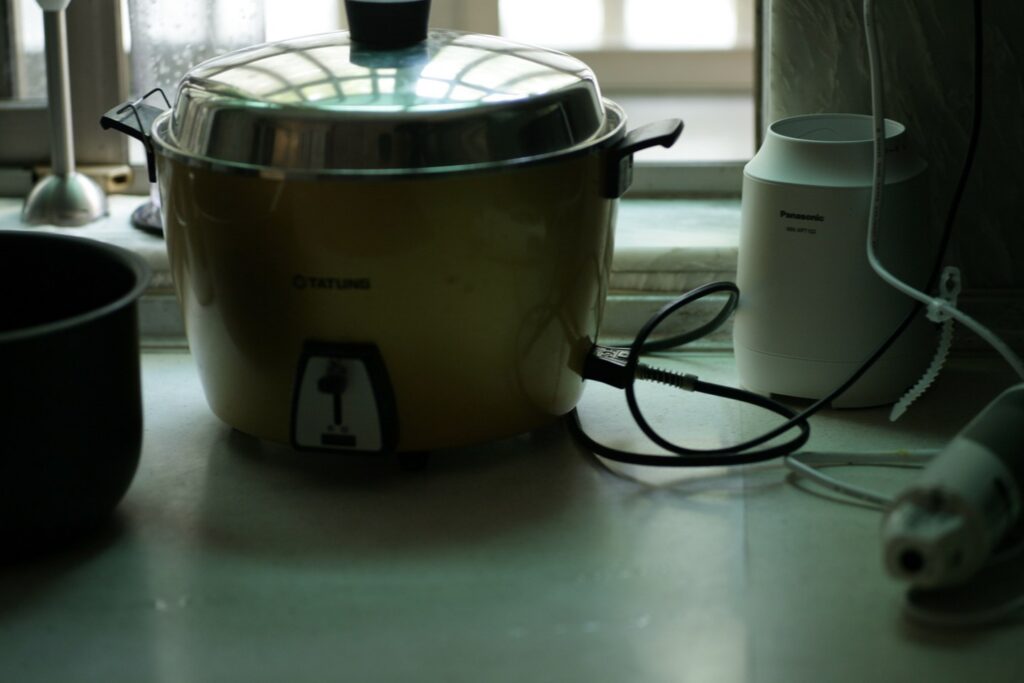
Energy efficiency is one of the main reasons why people are turning to slow cookers. Slow cookers use less energy than traditional cooking methods, and they keep food moist and flavourful.  Cooking in the oven consumes a lot of electricity and with energy bills on the rise, it makes sense to avoid putting the oven on as much as possible.  In fact, charities who help those on lower incomes are increasing turning to slow cookers as a way of helping people cook in a more frugal way.  Slow cookers don’t take up a lot of space in a kitchen either which can be a consideration if you have a small home.

slow cooker to save energy
Photo by MChe Lee on Unsplash

What is a slow cooker?

A slow cooker is an appliance that works on a low setting of heat to thoroughly cook the food. It is ideal for cooking meats and stews that need to simmer for a long time. This electrical device has now become a must-have in most modern kitchens. It is practical for people who prefer cooking easy, one-pot meals for their family.

How much energy does a slow cooker use?

Generally a slow cooker uses a similar amount of energy to a light bulb.  You’d need to use a 160 watt slow cooker for 15 hours and 42 minutes to match one hour in your electric oven.  That means that cooking a stew for 4-8 hours in a slow cooker is considerably more energy efficient than a normal electric oven.

What can I cook in a slow cooker?

An amazing range of things can be cooked in a slow cooker.  Most people think about using theirs for stews and casseroles, but you can do a lot more.  Some people use them to bake cakes.  I often do a roast chicken in mind (although it does lack the crispy, golden brown skin).  You can even do baked potatoes.

Different types of slow cooker

  • Cast Aluminium: They are oven and hob friendly but are not suitable for the microwave.
  • Ceramic: They are compatible with both microwaves and ovens. However, you can’t use them on a stove top or any direct flame.
  • Metal: They are used for slow-cooking meats and stews. However, the heating element of a metal cooker is set at the base only, which does not provide even heat distribution.
  • Thermal.  These don’t need any power. They work well for stews.  I often use my Wonderbag to finish a stew for me – you just need to get your mixture to the boil before placing the pot in the insulated Wonderbag.

Pros of a slow cooker

There are loads of benefits:

  • Dinner ready when you come home from work if you spend a little time getting it ready for the slow cooker before you leave.
  • Reduced energy costs
  • Slow cooking increases flavour
  • More nutrients retained in the cooking process – cheap and healthy meals
  • Reduced use of greaseproof paper or tin foil

Cons of a slow cooker

There aren’t many, but there are a few things to consider.

  • Don’t get the colour or crispiness associated with oven cooking unless you start or finish in a conventional oven
  • You need to plan and prepare your meal ahead
  • Cooking smells can make you hungry if you are working from home

All in all a slow cooker is a great way of cooking food and using a slow cooker to save energy costs is a good way of keeping your bills low.

Filed Under: Budgeting

Tips On How To Budget For Your Household

February 15, 2022 By Erica Hughes This post may contain affiliate links

how to budget your household finances
Photo by Aidan Hancock on Unsplash

Introduction: Why is it Important to Budget for Your Household?

Budgeting is a way to plan and manage your money. It is a process of deciding how much of your income you will spend and how much you will save. This way, you can make sure that you have enough money to cover your expenses and that you don’t incur debt.

There are many reasons why budgeting is important for every household, such as:

-Saving money

-Avoiding debt

-Planning for the future

-Eating well and paying the bills.

It is important to understand how to manage your household budget.The best way to start is by creating a budget plan. This will help you identify where your money goes and what you can do to make it last longer.

There are many different ways to create a budget plan, but the easiest way is by using an app or spreadsheet that will automatically calculate the total for you.

Using a spreadsheet to manage your finances

This is how I first started to manage my finances digitally.  I just used fairly simple excel spreadsheets that were essentially lists of what I’d spent and what I was about to spend.

The benefits of budgeting with spreadsheets are that you can create a simple plan for your finances, and it is easier to analyze and track your spending. The drawbacks are that it can be time-consuming to enter data into the spreadsheet, and there is a potential for human error.

Spreadsheets are a great way to keep track of your spending because they allow you to set up a simple plan for your finances. It is also easier to analyze and track your spending when using a spreadsheet instead of pen and paper. However, it can be time-consuming to enter data into the spreadsheet, which might make it less desirable than other methods if you have a lot of transactions. There is also potential for human error in entering data into the spreadsheet.

Using an app to manage your household budget

You can use an app as a budgeting tool that helps you to manage your household budget. Most budgeting apps will help you to track your expenses, create budgets, set savings goals and more.  The benefits of using an app are that it helps you to save money by giving you a clear picture of what you are spending on. It also motivates you to continue by showing you your progress over time.

Using cash as a budgeting tool

This is a bit old school, but it’s a good way of introducing children to budgeting or it’s good to use if digital banking isn’t your thing.  It’s very visual and it’s easy to keep track of where you are.  The trouble is that you will find it harder to get an overall picture of your financial situation.  Also, so many bills are paid online that it has limited uses.

Filed Under: Budgeting

  • « Previous Page
  • 1
  • 2
  • 3

About Me

Hi

I have a background in financial services and enjoy writing about all things money.  I like coming up with ideas to save you money and to earn you some extra cash.  More about me here. Get in touch via email. erica

Categories

  • Blogging
  • Borrowing
  • Budgeting
  • Car
  • Earn
  • Financial Education
  • Gifts
  • Giveaway
  • Inheritance
  • Money
  • Property
  • Reward Sites
  • Save Money
  • Saving and Investment
  • Training and education
  • Uncategorized

Copyright Erica Hughes 2021 Affiliate links means that sometimes if you click through to a website and register or purchase something, I get a commission from that sale at no extra cost to you. All opinions and reviews are my own.

We use cookies on our website to give you the most relevant experience by remembering your preferences and repeat visits. By clicking “Accept All”, you consent to the use of ALL the cookies. However, you may visit "Cookie Settings" to provide a controlled consent.
Cookie SettingsAccept All
Manage consent

Privacy Overview

This website uses cookies to improve your experience while you navigate through the website. Out of these, the cookies that are categorized as necessary are stored on your browser as they are essential for the working of basic functionalities of the website. We also use third-party cookies that help us analyze and understand how you use this website. These cookies will be stored in your browser only with your consent. You also have the option to opt-out of these cookies. But opting out of some of these cookies may affect your browsing experience.
Necessary
Always Enabled
Necessary cookies are absolutely essential for the website to function properly. These cookies ensure basic functionalities and security features of the website, anonymously.
CookieDurationDescription
cookielawinfo-checkbox-analytics11 monthsThis cookie is set by GDPR Cookie Consent plugin. The cookie is used to store the user consent for the cookies in the category "Analytics".
cookielawinfo-checkbox-functional11 monthsThe cookie is set by GDPR cookie consent to record the user consent for the cookies in the category "Functional".
cookielawinfo-checkbox-necessary11 monthsThis cookie is set by GDPR Cookie Consent plugin. The cookies is used to store the user consent for the cookies in the category "Necessary".
cookielawinfo-checkbox-others11 monthsThis cookie is set by GDPR Cookie Consent plugin. The cookie is used to store the user consent for the cookies in the category "Other.
cookielawinfo-checkbox-performance11 monthsThis cookie is set by GDPR Cookie Consent plugin. The cookie is used to store the user consent for the cookies in the category "Performance".
viewed_cookie_policy11 monthsThe cookie is set by the GDPR Cookie Consent plugin and is used to store whether or not user has consented to the use of cookies. It does not store any personal data.
Functional
Functional cookies help to perform certain functionalities like sharing the content of the website on social media platforms, collect feedbacks, and other third-party features.
Performance
Performance cookies are used to understand and analyze the key performance indexes of the website which helps in delivering a better user experience for the visitors.
Analytics
Analytical cookies are used to understand how visitors interact with the website. These cookies help provide information on metrics the number of visitors, bounce rate, traffic source, etc.
Advertisement
Advertisement cookies are used to provide visitors with relevant ads and marketing campaigns. These cookies track visitors across websites and collect information to provide customized ads.
Others
Other uncategorized cookies are those that are being analyzed and have not been classified into a category as yet.
SAVE & ACCEPT